SKIDDAW
A Lakeland rock band
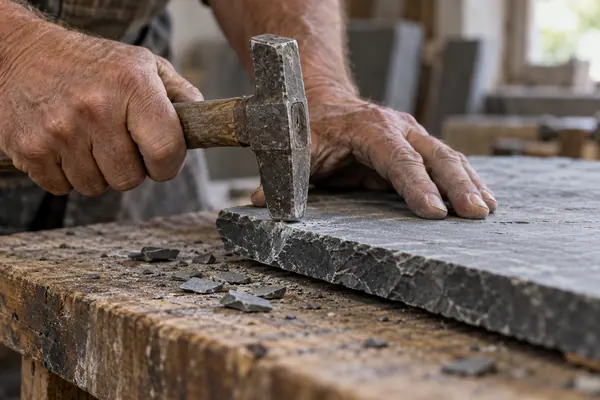
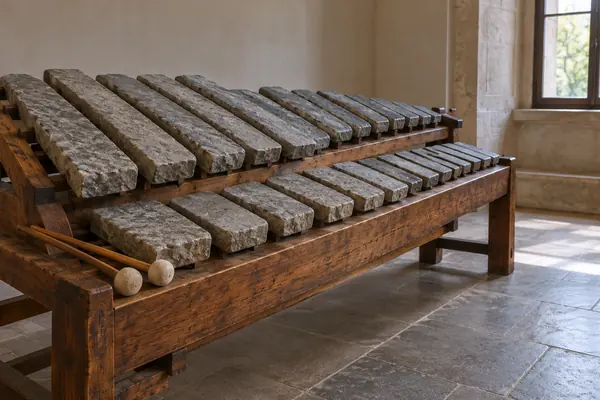
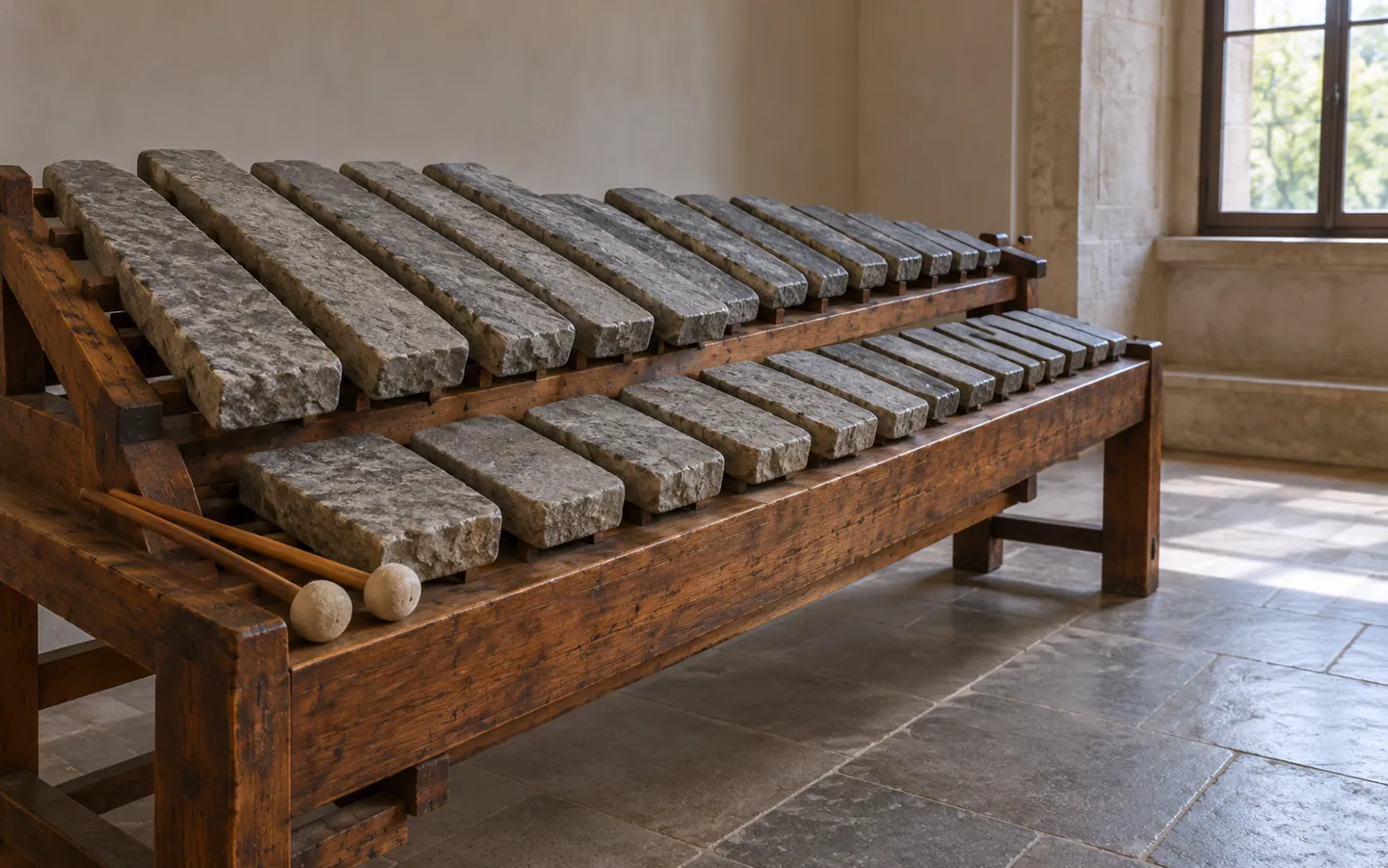
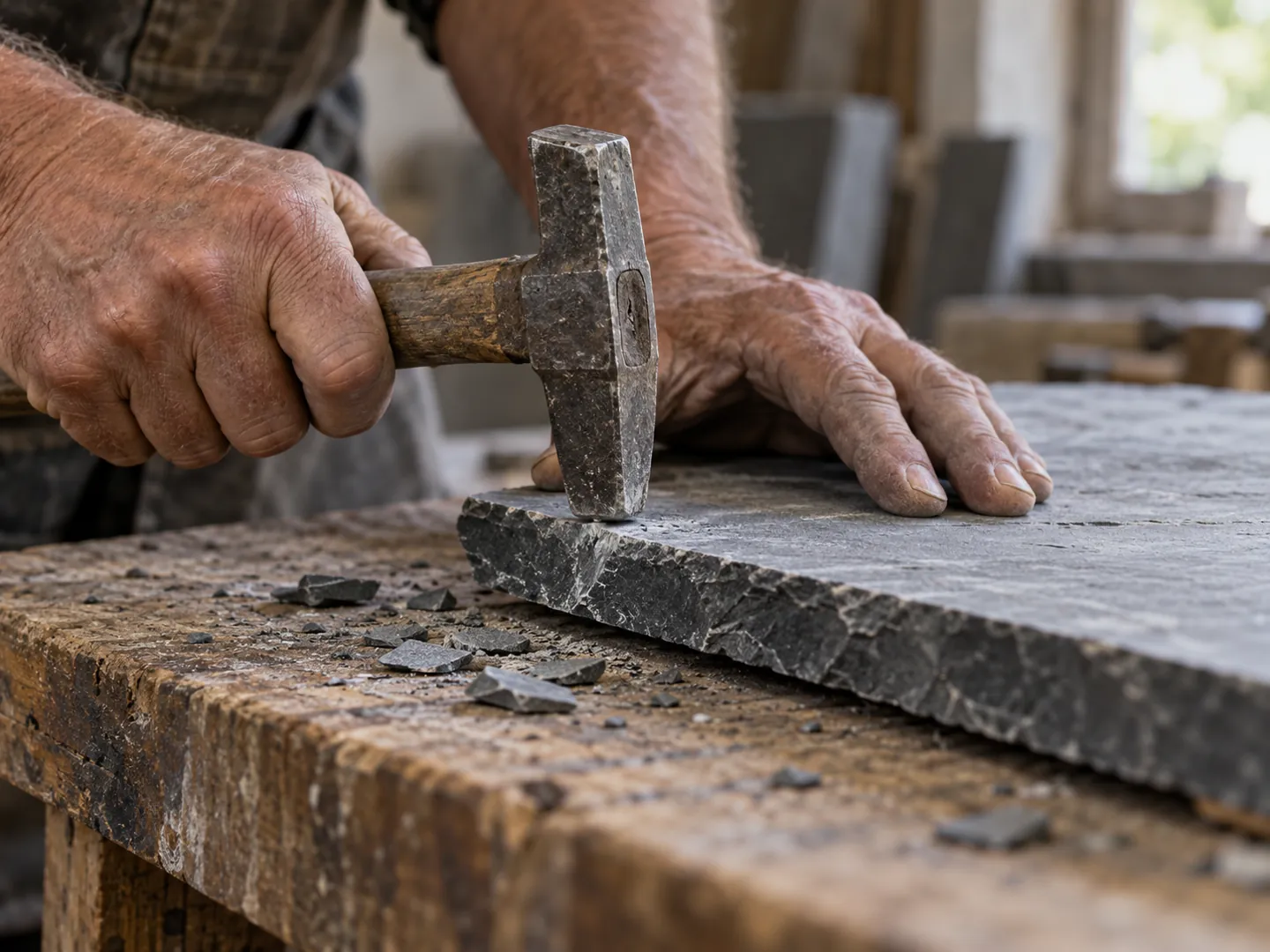
Keswick stonemason Joseph Richardson spent thirteen years, from 1827 to 1840, building an instrument of hornfels slabs. It played before Queen Victoria at Buckingham Palace in 1848.
The story soundboardrock
STONE THAT MAKES MUSIC
Tap most stones and you hear a dull clack.
A few kinds of rock, cut or broken the right way, carry on sounding for a moment after you strike them. Lakeland stonemasons built whole instruments from them, and scientists are still working out exactly why they ring.
RING true
Will it ring?THE SHORT ANSWER
A ringing stone needs the right rock
and the right size and thickness to sing.
SKIDDAW
Keswick stonemason Joseph Richardson spent thirteen years, from 1827 to 1840, building an instrument of hornfels slabs. It played before Queen Victoria at Buckingham Palace in 1848.
The storyTUNING
One 19th-century account of a Lakeland set says chipping off a stone's ends raised its tone, while taking a piece from the middle deepened it. Once tuned, it was said never to go out of tune.
Listen for yourselfBOULDER FIELDS
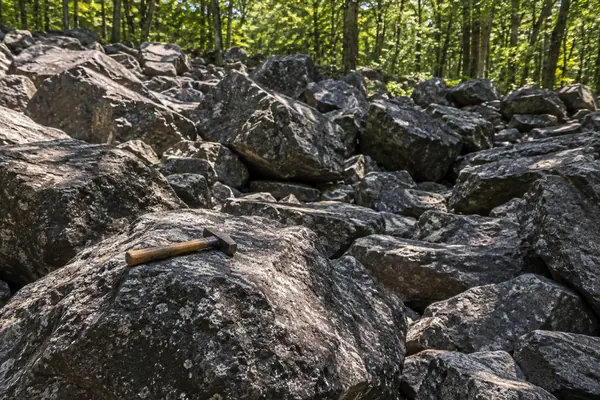
In a random sample of 534 boulders at Pennsylvania's Ringing Rocks County Park, 167 rang. The rest gave the dull thud you would expect from a rock.
See the numbers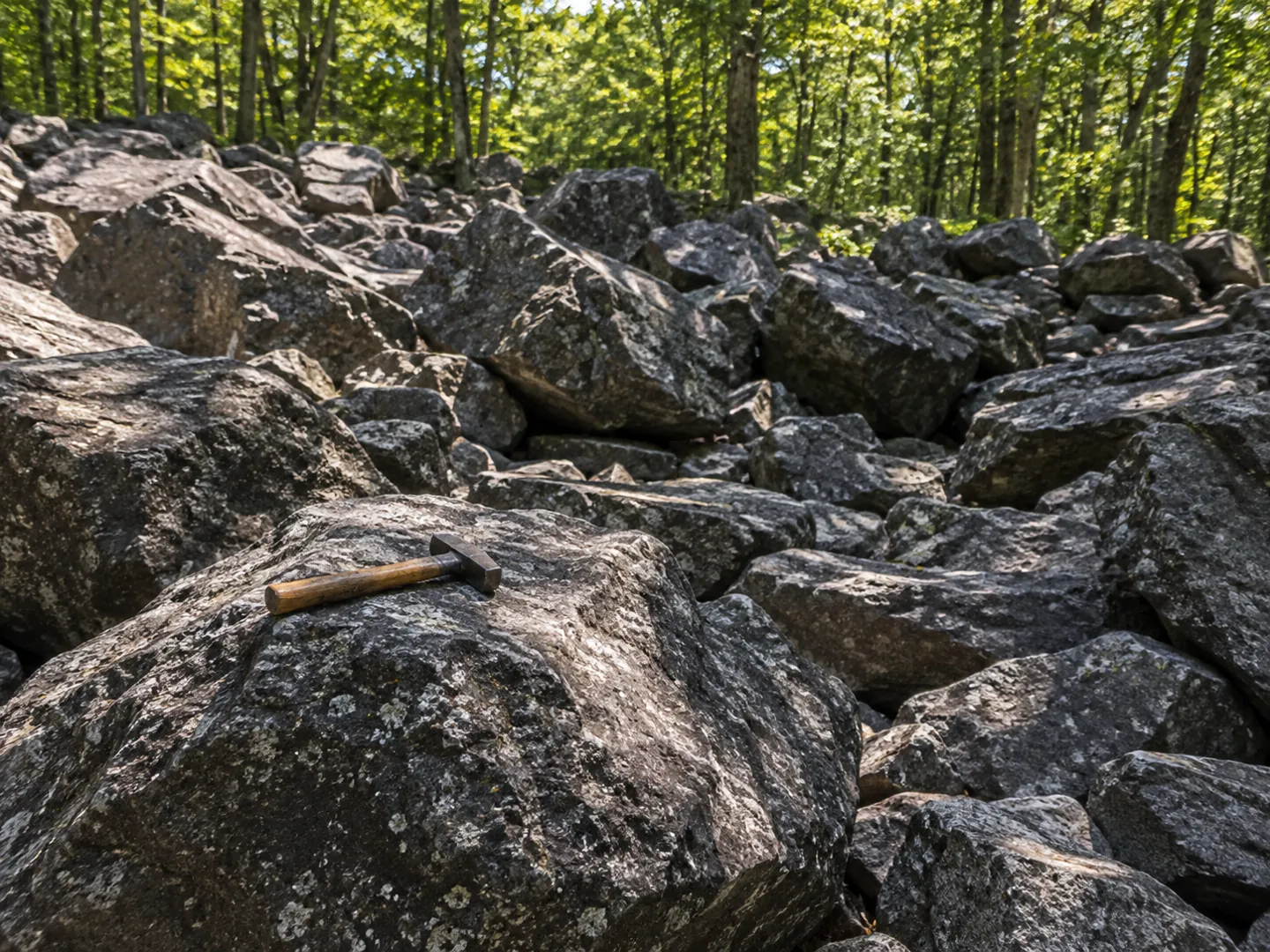
FOUR WAYS TO HEAR IT
You do not need to go hunting on the fells. Two Cumbrian museums let visitors play their stone instruments.
Visitors to the Keswick Museum are encouraged to play the Richardson instrument with the special mallets provided, and Kendal Museum invites people to play its two lithophones.
The Richardson players struck their stones with oval-headed mallets of fir wood covered in chamois leather, with handles over a foot long.
A ringer keeps sounding for several tenths of a second. A non-ringer gives a dull thud, with only the click of the beater carrying any pitch.
Leeds geologists note a strong link between the length of the Skiddaw stones and their pitch. Try the long bass stones against the short treble ones.
TWO NUMBERS WORTH KNOWING
One figure from a hammer survey in Pennsylvania,
one from the Skiddaw stones in Keswick.
31%
Share of boulders that rang
Acoustic consultants struck an evenly spread, random sample of 534 boulders at Ringing Rocks County Park. 167 met their test for ringing, which they put at 31% (plus or minus 4%) with 95% confidence.
534 BOULDERS · ACENTECH 2020
2.5–3 cm
Thickness of the stone bars
All 35 stones in the main scale, and the 25 on the top row, are close to 2.5 to 3 cm thick. The largest is 1.03 m long and only 8 cm wide; the smallest is 18.5 cm long.
RICHARDSON INSTRUMENT · LEEDS 2008
Why the Pennsylvania boulders ring is still debated. In 1965 Richard Faas of Lafayette College found they produced tones below the range of human hearing, and a 1960s Rutgers test found ringers changed size when cut, suggesting stored internal stress.
A QUICK STONE CHECK
Pick a stone to see what geologists and acousticians reported about it. The bar shows how well that kind of stone rang in their accounts.
Based on field reports from Skiddaw in Cumbria and a boulder field in Pennsylvania. A single stone can surprise you either way.
FROM THE FELLS TO THE PALACE
On 10 June 1785, Keswick inventor Peter Crosthwaite wrote that he had found six musical stones on the sand beds of the River Greta. The remaining ten of his set took six months to find, chipped by hand, 12 hours a day, until each note rang true. That set of 16 stones is still on show in Keswick.
Joseph Richardson's much larger set, first called the Rock Harmonicon, was played by his three sons at once. They toured Britain between 1840 and 1852 and visited Paris, Brussels and Vienna. A grandson gave the instrument to the Keswick Museum in 1917.
Questions
A percussion instrument made of stone. Kendal Museum describes it as looking like a xylophone but made of stone, from the Greek 'lithos' for stone and 'phone' for voice or sound.
It depends on the rock and its condition. The Skiddaw stones are hornfels from right beside the Skiddaw Granite, where heat recrystallised the rock into an interlocking texture with no slaty cleavage left. For the Pennsylvania boulders, tests point to stress stored inside the rock.
The Richardson instrument is on display at the Keswick Museum, where visitors are encouraged to play it with the mallets provided. Kendal Museum also welcomes visitors to play its slate and limestone lithophones.
Not when it is moved whole. Acousticians carried one Pennsylvania ringer onto soil and it still rang, though its main pitch shifted from 4,253 Hz to 5,660 Hz. Breaking a piece off is different: it releases the stress and leaves a dead chunk.
Yes. The Horniman Museum in London holds a Chinese qing, a stone chime of nephrite or jadeite inscribed as made in the 29th year of the Qianlong era. Kendal Museum notes that Carl Orff wrote for a lithophone, his 'Steinspiel', in operas such as Antigone (1949).
Updated
ABOUT THIS NAME
soundboardrock.com is part of the DoodleSale portfolio. It isn't in an auction right now, but you can ask about leasing it.